What Are Screen Shades and Why Are They a Better Choice Than Wood Blinds for Large Windows?
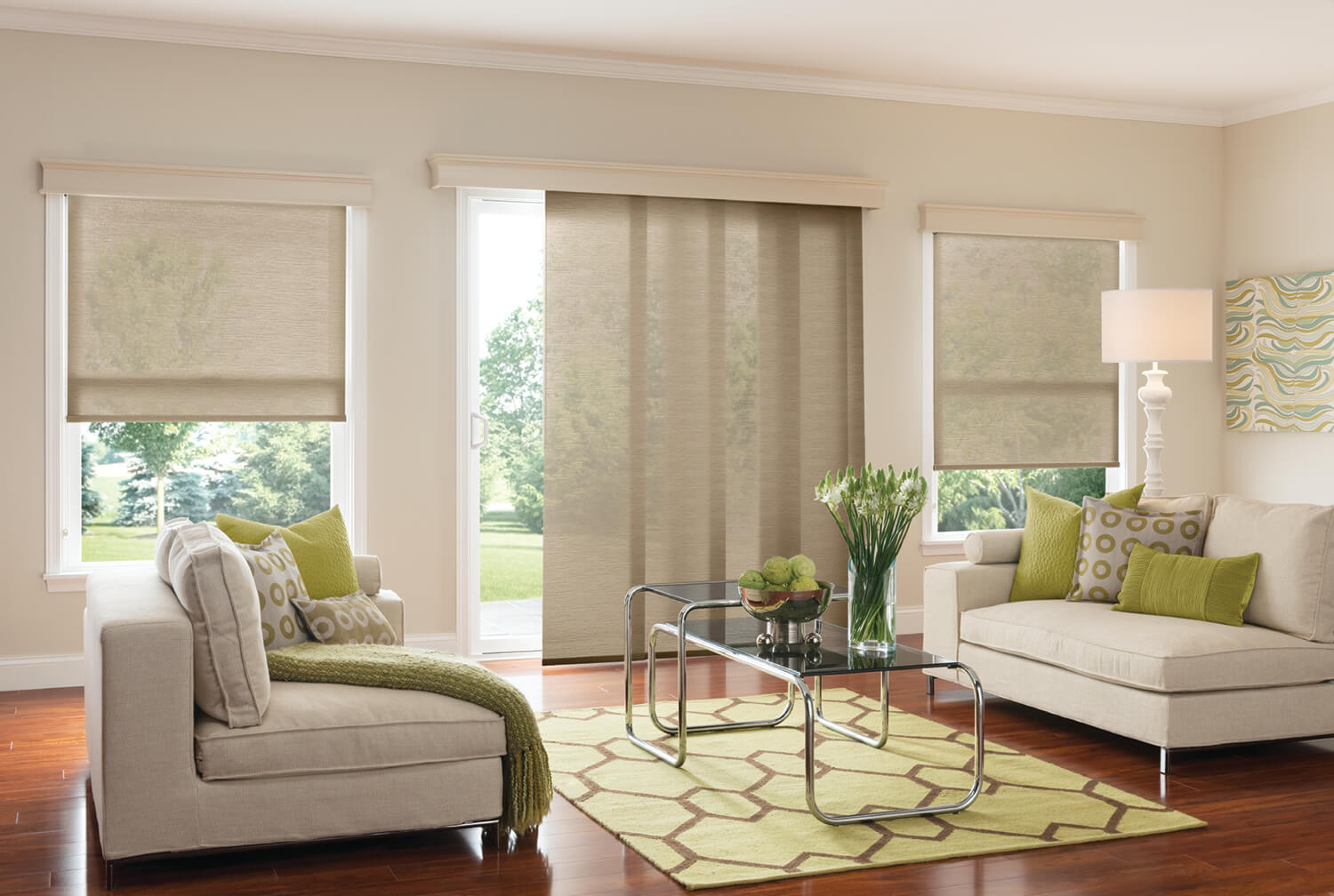
Screen shades are roller-style window coverings made from an open-weave fabric that filters light without fully blocking it. For large windows, especially in commercial or semi-commercial spaces, they outperform wood blinds in nearly every way. They handle bigger spans, collect far less dust, and create a clean, polished look that wood blinds simply cannot match at scale.
A client recently reached out to us about window treatments for a set of large windows in an institutional space. They had already received a quote for faux wood blinds and were second-guessing the choice. Once we talked through the options, screen shades were the clear winner. If you are weighing the same decision for your space in Campbell, CA, here is what you need to know.
At The Yardstick Inc., we work with homeowners and commercial clients on exactly these kinds of decisions every day. The right window treatment depends on the size of the window, how you want light to behave, and how much maintenance you are willing to do.
What Exactly Is a Screen Shade?
A screen shade is a roller shade made from a mesh or open-weave fabric that reduces glare and UV exposure while still allowing filtered natural light into the room. You have almost certainly seen them in office lobbies, reception areas, and conference rooms. They roll up cleanly and sit flat when deployed.
They come in different openness percentages, typically ranging from 1% to 14%. A 1% openness fabric blocks more light and gives more privacy. A 14% fabric lets in significantly more light while still cutting glare. For most large windows where glare control is the primary goal, a 5% to 10% openness is a solid starting point.
Why Do Wood Blinds Fall Short on Large Windows?
Wood blinds and faux wood blinds are designed for standard residential window sizes, and most manufacturers have moved away from making them in large spans due to cord safety regulations and structural limitations. Even when you can find them in larger sizes, the slats bow in the middle and the cords become unwieldy.
Beyond the size problem, there is a practical one: slat blinds are dust traps. Every horizontal slat collects dust, pet hair, and allergens. On a large window, that is a lot of surface area to clean regularly. Screen shades have no slats, no cords to tangle, and wipe down easily.
Aesthetically, a large window with bulky wood blinds can feel dated and heavy. A screen shade gives the same window a clean, modern look that works in both commercial and residential settings. Our commercial window shades page covers more of what we offer for larger-scale applications.
What Should You Look for When Choosing a Screen Shade?
The three main decisions are openness percentage, fabric color, and whether you want the shade to be motorized. Each one affects how the shade performs and how it looks in your space.
- Openness percentage: Lower numbers mean more privacy and light blocking. Higher numbers let in more daylight but reduce glare less aggressively.
- Fabric color: Lighter fabrics reflect more heat. Darker fabrics tend to improve outward visibility while still controlling glare.
- Motorization: For large or high windows, motorized operation is far more practical than a manual pull cord. It also adds longevity to the shade mechanism.
Our team can walk you through fabric samples in person so you can see exactly how light passes through each option before committing. Learn more about our experience and background to understand what we bring to these consultations.
Are Screen Shades a Good Fit for Gyms or Auditorium-Style Spaces?
Yes, screen shades work exceptionally well in gyms, auditoriums, and large open rooms where light control and durability both matter. These spaces often have high windows that are difficult to reach, which makes motorized screen shades an especially practical choice.
Heavy fabric curtains are common in older institutional spaces, but they collect dust, fade over time, and are difficult to clean. A quality screen shade is far lower maintenance and gives you precise control over how much light enters the space at any given time.
Can screen shades completely block light?
No, standard screen shades are designed to filter and diffuse light, not eliminate it. If you need full blackout capability, a blackout roller shade or a dual-shade system is the better option. We can show you both side by side.
Do screen shades work for residential windows too?
Absolutely. Screen shades are just as popular in homes, especially in rooms with west-facing windows or living areas where afternoon glare is a problem. They let you keep the view while cutting the harshest light.
How do I know what openness percentage is right for my windows?
The best way is to see fabric samples in natural light in your actual space. As a general rule, 5% works well for most glare-control needs, while 10% or higher suits spaces where you want a more open, airy feel. We always recommend an in-person consultation before finalizing a selection.
If you are in Campbell, CA and trying to figure out the right window treatment for a large window, a commercial space, or a room that just is not working the way it should, contact us to set up a consultation. We will come to your space, look at the light, and give you a recommendation that actually makes sense for what you need.